Polished Concrete Floors in the Triad
Ground, densified and polished concrete for showrooms, retail and warehouses. No coating to peel.
Why the Slab Itself Is Often the Right Floor for a Triad Business
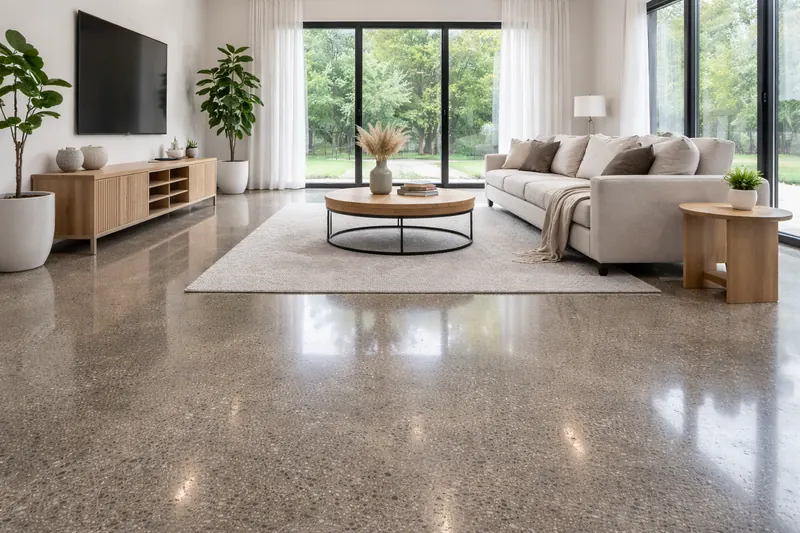
Ascent Epoxy Greensboro grinds, densifies and polishes concrete floors for showrooms, retail, taprooms and warehouses across the Piedmont Triad. Run a showroom, store or warehouse in the Triad and the floor takes two kinds of abuse: the daily grind of foot traffic, rolling racks and pallet jacks, and a Piedmont year that runs from a muggy summer into a winter when road brine and rock salt ride in on every shoe and tire. A coating handles that well when it is done right, but it is still a film on top of the concrete — and a film can be gouged, scratched or, on a slab that was never moisture-tested, lifted. Polished concrete sidesteps that entirely: there is nothing on top to peel, because the finish is the slab.
The work is mechanical, not chemical. We run progressively finer diamond tooling across the existing concrete — grinding, hardening it with a penetrating densifier, then refining it to the sheen you choose. Because nothing is laid over the surface, the slab keeps breathing the way it always has, and a humid August or a slush-tracked January gives the floor no coating to fail. With routine dust mopping and a fresh coat of penetrating guard every few years, a polished floor keeps its sheen through muggy Piedmont summers and brine-tracked winters.
That durability is why polished concrete fits the kinds of spaces the Triad actually has: furniture showrooms in High Point that want a bright, neutral floor under the product before Market; retail and boutiques; taproom and restaurant floors that get mopped nightly; light-industrial and warehouse suites along I-40 and I-85; and open-plan offices that want a clean, low-fuss floor. Forklift traffic, dropped tools, dragged pallets, salt and red clay tracked in from the lot — a hardened, densified slab takes all of it without a coating to gouge.
Polished concrete is the right call when you want the slab itself to be the finish. If your project needs a built-up coated system instead, our industrial epoxy flooring and commercial epoxy flooring pages cover those. Polished concrete is priced after we measure and test your slab; for coated systems, see the commercial floor price ranges.
Get a Free Quote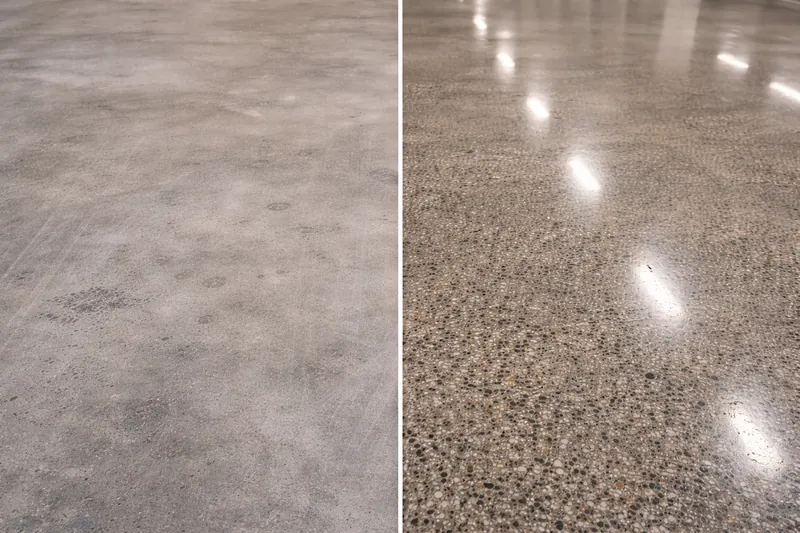
What Polished Concrete Does for a Triad Floor
Bright, hard and breathable — built for a muggy summer, a brine-tracked winter and a business that can't close for refinishing.
More light
Brighter Without More Lights
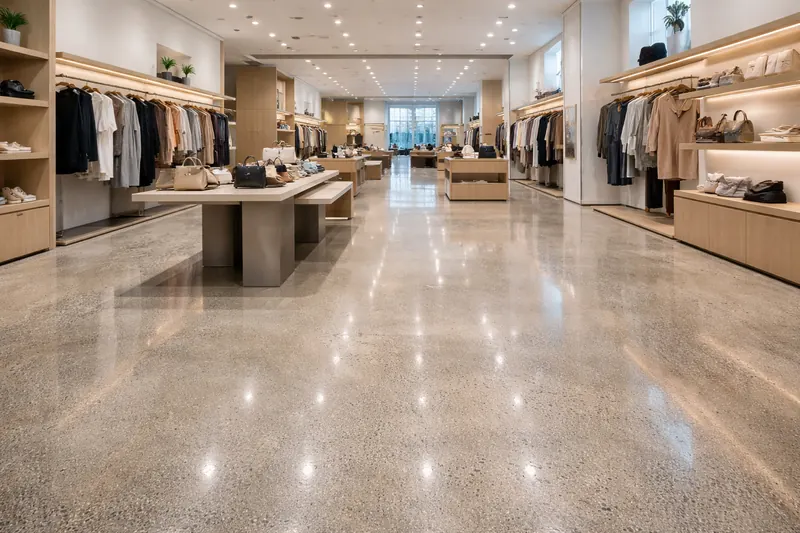
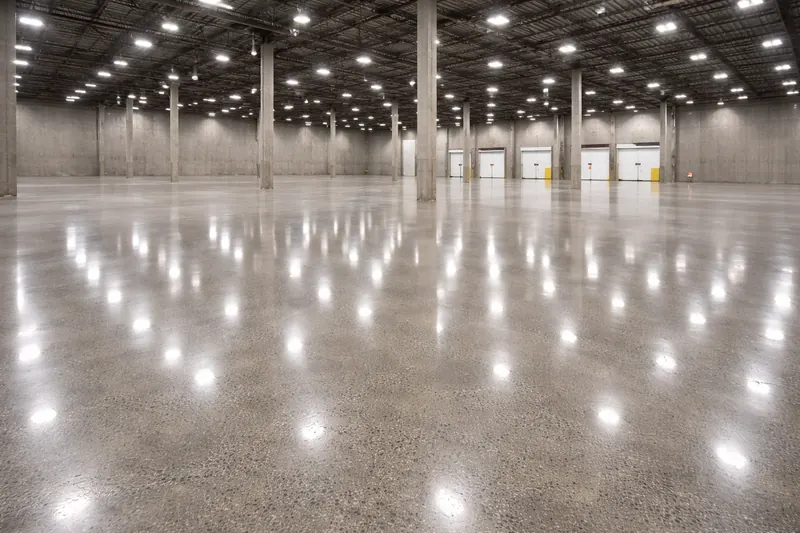
A polished slab bounces ambient and overhead light back up, so the same fixtures make the space read noticeably brighter. In a warehouse off I-40 or a High Point showroom, that means fewer fixtures running and a floor that reads clean and high-end under both daylight and store lighting.
No wax
Mop and Move On
Upkeep is a dust mop and the occasional damp mop — no wax, no stripping, just a penetrating guard refreshed every few years. For a busy taproom, retail floor or shop that already fights tracked-in red clay and winter salt, that is one less standing expense and no shutdown for refinishing.
None
Nothing to Peel or Lift
The finish is the concrete, so there is no film to lift, blister or delaminate — the failure you see on coated floors that went down over an untested, damp slab or in the wrong weather. On an older Triad slab of uncertain history, that is the difference between a floor that lasts and one you redo.
Breathable
Lets the Slab Breathe
With no membrane sealing the top, moisture in the concrete keeps venting the way it always did. That breathability is why polishing can make sense in a building with a history of coating failures; we still check moisture and hardness first and tell you straight if the slab can't take a polish.
Decades
Made to Outlast Piedmont Seasons
A correctly polished floor is built for decades of traffic through the Triad's muggy summers, ice-storm winters and everything tracked in between. There is no wear layer to grind off and no coating to fail, so the cost-per-year lands well below systems you replace or recoat.
Densified
Hardened Against Salt and Dust
A lithium-silicate densifier soaks into the slab and reacts to harden and tighten the surface from within. The floor stops shedding concrete dust and gives tracked-in brine, salt and grit far less to bite into — a real edge at dock doors and store entries in January.
Our Polishing Process, Step by Step
Five steps take a dull, porous slab to a hard, bright, dust-proof floor — starting with a moisture and hardness check, then the densifier and sheen matched to what your concrete and your space actually need.
Concrete Assessment
~45 minWe walk the slab, map cracks and damage, test hardness, and check moisture before committing to an approach. Joints get filled and defects patched first. If the readings come back high or the concrete is too soft to hold a polish, we tell you straight rather than polishing over a problem. Schedule a free assessment.
Coarse Grinding
4–8 hrsDiamond tooling takes off surface imperfections, blemishes and any old failed coating — common on older Triad commercial slabs that were sealed once and let go. This pass levels the concrete and opens up clean aggregate for an even, high-quality polish.
Densifier Application
1–2 hrsA lithium silicate densifier floods the slab and reacts inside it, hardening the concrete and tightening the surface from within. This is the step that fights dusting and gives a floor the density it needs to take and hold a high polish through humid summers.
Fine Polishing
6–10 hrsWe work up through progressive grits — 400, 800, 1500, and 3000 — stopping at the sheen you picked, from a soft satin for a boutique to a full reflective gloss for a showroom. Each pass tightens the surface and builds the light-bounce that defines a polished floor.
Penetrating Guard
1–2 hrsA protective guard treatment goes down last for stain resistance. It is a thin, penetrating layer — not a film — so spills wipe up and daily cleaning stays easy without changing the look or shutting off the slab's ability to breathe.
Ready to Start? The Assessment Is Free.
Schedule your no-obligation slab evaluation and see what level of polish your concrete can achieve.
Polished Floors by Blake's Crew
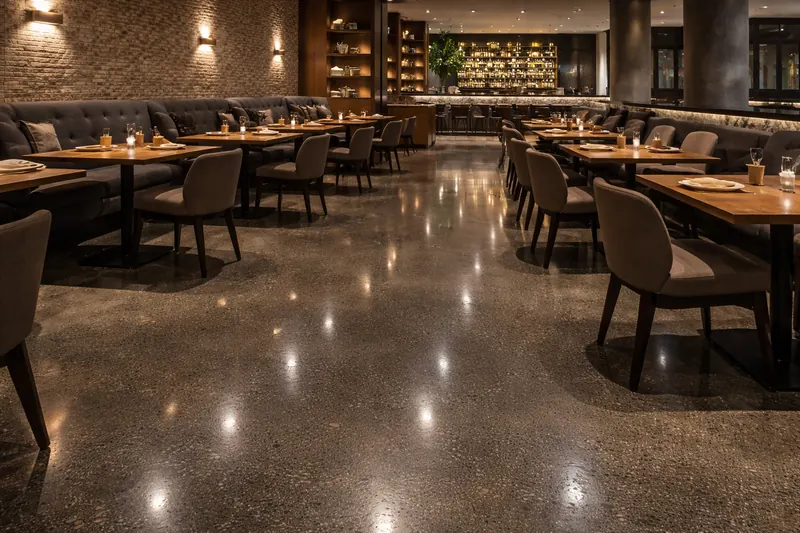
Showrooms, retail floors and warehouse slabs polished by the crew in our other markets — the same process now available across the Triad.
Newly Serving the Triad, With the Process in Writing
Blake's crew leads every job and has done this work in ten other markets before Greensboro.

Meet Blake
Blake leads the crew from the first slab test to the final walkthrough, and the work is phased around your hours so it does not shut you down.
Polished Concrete FAQs for the Triad
What Triad business and property owners should know before committing to a polished floor.
Polished concrete mechanically refines the existing slab to the sheen you choose using progressively finer diamond tooling and a densifier; epoxy applies a polymer coating on top of the concrete. Because polished concrete has no coating layer, it cannot peel or delaminate the way a coating can, but it also won't hide a badly stained or patched slab or give you a solid color or flake finish. Polished concrete suits large open commercial floors that want a natural, low-maintenance look; coatings suit garages, kitchens and any floor that needs color, chemical resistance or a seamless sanitary surface.
Polished concrete is priced by the square foot, and the two things that move the number most are how much grinding and repair the slab needs and how high a sheen you want. Large open floors cost less per foot than small, cut-up ones, and a slab with an old failed coating costs more to open up than clean concrete. We have not found a published Triad price for polished concrete, so we won't print a number we can't back up — we measure, moisture-test and hardness-test the slab on a free visit and give you a written price, and for coated systems our commercial epoxy page lists national per-square-foot ranges. Contact us at (336) 358-6309 for a free, no-obligation estimate.
Most existing slabs can, including the decades-old floors under many Triad commercial buildings and warehouses. Cracks, spalls and surface damage are repaired during the initial grinding phase, and an old failed sealer or coating is ground off. What we can't polish is a slab that is too soft or too badly patched to take a consistent finish — we test hardness and moisture during the free assessment and tell you straight if polishing isn't the right call. Call (336) 358-6309 to schedule yours.
With basic maintenance, a polished concrete floor is built for decades of traffic. Because the finish is the concrete itself, there is no wear layer to grind off and no coating to chip or peel. Routine dust mopping, occasional damp mopping and a fresh coat of the penetrating guard every few years are all it takes to keep the floor looking like new.
Polished concrete has slip resistance comparable to other common hard floors like tile and terrazzo, and it is not inherently more slippery than unpolished concrete when dry. For entries that get wet in a summer downpour or on an ice-storm morning, and for restrooms and bar areas, anti-slip guards and treatments can be applied to raise traction without changing the look of the floor.