Garage Floor Epoxy in the Triad
Polyaspartic garage floors built for road brine and humid summers, most in one day.
Why a 1980s Triad Garage Slab Is a Harder Job Than It Looks
Ascent Epoxy Greensboro installs epoxy and polyaspartic garage floor coatings in Greensboro, High Point, Winston-Salem and the rest of the Piedmont Triad. Most Triad homes are framed over a crawlspace, so the garage is usually the one concrete slab on the property — and on a house built between the mid-1980s and 1990, the median range across Greensboro, Winston-Salem and High Point, that slab is 35 to 40 years old. It has taken decades of dripping oil, tracked-in red clay and parked cars, and if it was never sealed it is stained, dusty and often pitted. Paint or a hardware-store kit rolled over concrete like that lifts within a season, because nothing was done about the surface underneath.
A Piedmont year works that slab from both sides. In winter, NCDOT and the city pre-treat the main roads with salt brine before an ice storm and spread rock salt after it, and your tires carry the slush straight onto bare concrete, where salt plus freezing and thawing scales the surface into thin flakes and pits. In summer, tires roll in hot after a run up I-40 and bake the spot they park on, while muggy air keeps the slab damp. Bare concrete drinks all of it — the staining, the dusting, the slow crumble of the surface that finished living spaces never have to endure.
The fix is a garage floor coating system built for both seasons. We diamond-grind the slab open, repair cracks, spalls and control joints, and run an ASTM slab-moisture test before a drop of coating goes down; when the numbers run high, a moisture-mitigation primer goes on first. On top goes a high-build base coat carrying broadcast flake or solid color, sealed under a UV-stable polyaspartic topcoat that shrugs off hot tires and road brine alike, and in the humid months we time the install around slab temperature and dew point.
Most two-car garages land between about $2,000 and $4,000, and the Greensboro garage cost guide shows what slab age, grinding and crack repair add. Business owners can see our commercial epoxy systems. It is the same garage floor coating process from Summerfield and Oak Ridge down to Jamestown and Thomasville.
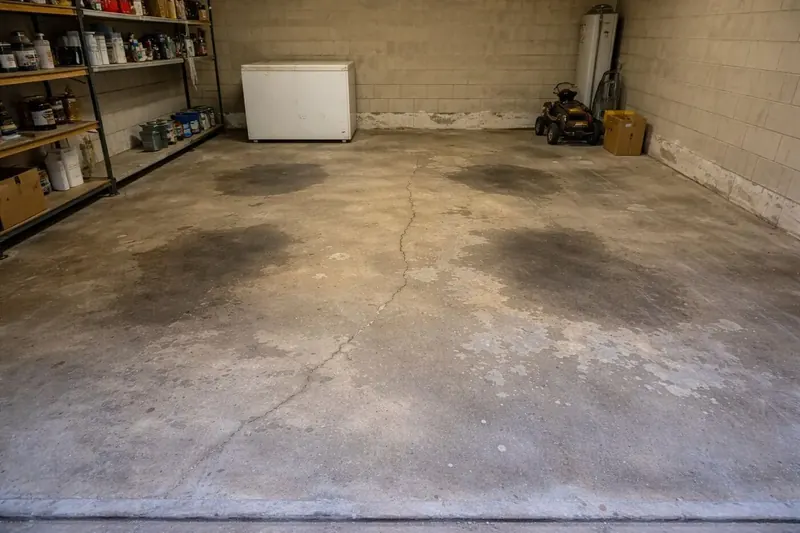 Before
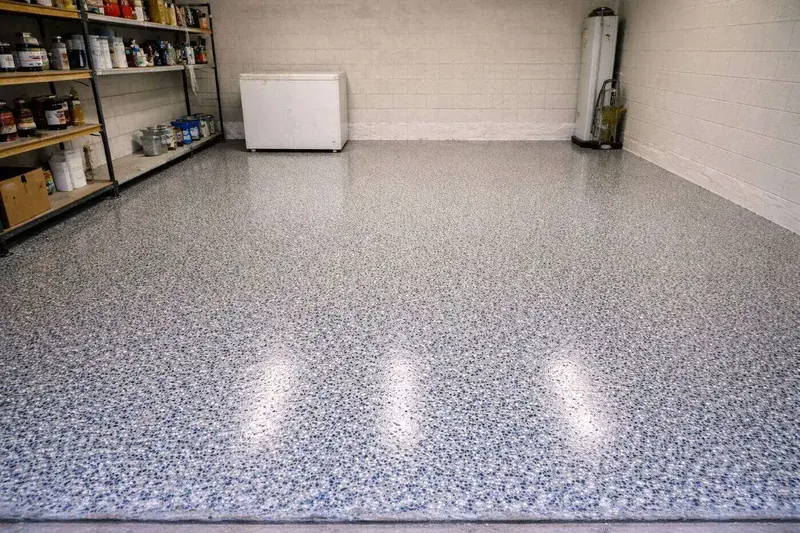 After
After
What a Polyaspartic Garage Floor Coating Does for a Greensboro Home
Looks are the easy part. These are the six things a sealed flake or metallic floor does for a garage that sees brine in January and 90-degree tires in July.
33 days
No Hot-Tire Pickup on 90°F Days
Pull off I-40 or the Urban Loop on an August afternoon and your tires are scorching; Greensboro averages about 33 days a year at 90°F or hotter. Cheap roll-on kits grip those tires and lift off in patches — a polyaspartic topcoat is built to resist hot-tire pickup and stays put.
Why summer install timing matters →0 stains
Brine & Oil Wipe Right Off
Road brine and rock salt off the tires, motor oil, red clay tracked in from the ball field, fertilizer from the yard — none of it soaks in. The sealed, pore-free surface keeps every spill sitting on top where a rag or hose takes it away.
Safe
Grip on Wet and Icy Days
Whether you walk in from a summer thunderstorm or drag January slush in on your boots, a slick floor is a real hazard. Broadcast flake plus an anti-slip additive in the topcoat give the surface texture that holds your footing even dripping wet.
25 yrs
A Warranty You Can Read
The reason most garage coatings fail early is skipped prep, not bad product. Grind the slab, test it for moisture, seal it under polyaspartic, and the floor is built to last — which is why ours carries a written 25-year warranty against delamination, peeling, cracking and adhesion failure that you can read before you sign.
How humidity affects durability →5 min
A Hose-Down Is the Whole Routine
Sweep out the leaves and grass clippings, rinse the winter brine off, done. No resealing, no waxing, no annual re-coat. With no joints or pores, salt residue and grit have nowhere to lodge — the floor never powders the way bare slab does.
Resale
A Detail Buyers Remember
When a Triad home goes on the market, a showroom-clean garage is the kind of finished detail that sticks in a buyer's memory after the walkthrough — and it photographs far better in a listing than a stained gray slab.
See full pricing guide →Five Steps to a Garage Floor Coating Built for a Piedmont Year
Every install runs the same disciplined sequence — the moisture testing is the step that separates a floor that lasts from one that peels by next summer.
Free Consultation
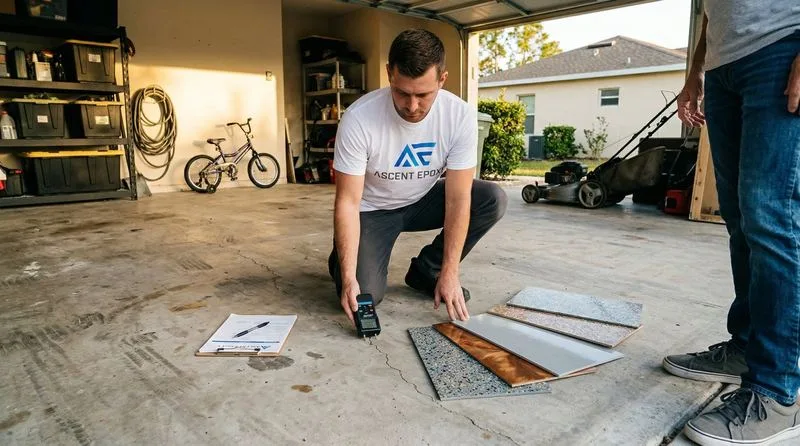
~45 minWe come to you anywhere in the Triad, measure the bay, read the slab for stains, pits and scaling at the door, take a first moisture reading, and lay out flake and metallic options against your wall color. You leave holding a written, line-item quote, not a ballpark guess — and if the slab may need a moisture-mitigation primer (about $1 per square foot), it is priced on that quote up front. Book your visit free.
Surface Preparation
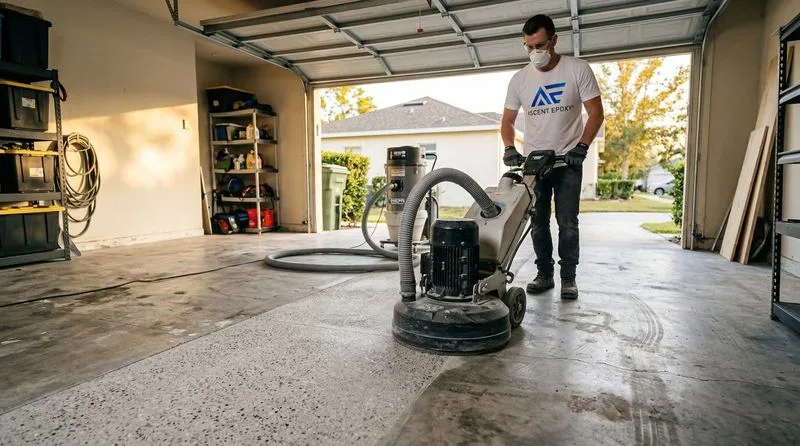
2–4 hrsDiamond grinders cut off the slick top skin of the slab so the coating can mechanically lock in — no acid-etch shortcuts. Then comes the step to look for by name on any quote: the full ASTM slab-moisture test (F1869 or F2170), run before any coating goes down, to see how much vapor a 35-year-old slab is pushing up.
Crack & Joint Repair
30–60 minHairline cracks, pits and scaled patches where winter brine sat by the door, and the control joints all get ground out, filled with a crack-repair compound and ground flush. Done right, none of it ever ghosts back up through the finished coating.
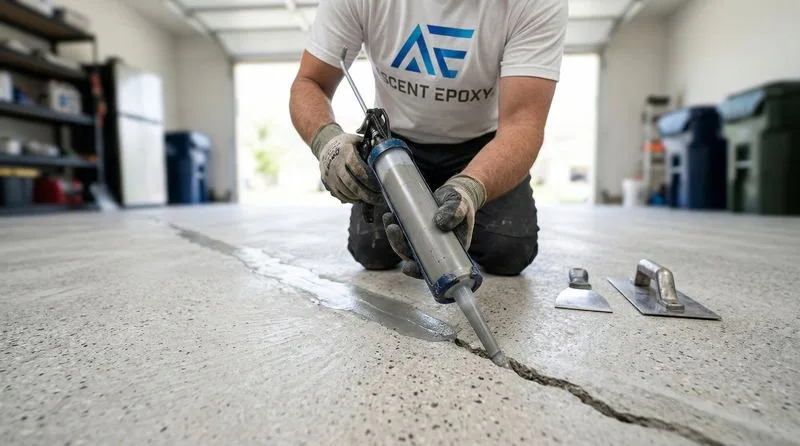
Multi-Coat Application
3–5 hrsIf the moisture readings ran high, a moisture-mitigation primer goes down first — the single thing that keeps a damp slab from blistering its coating. Then a high-build base coat broadcast with flake or swirled metallic, sealed under a UV-stable polyaspartic floor coating that takes hot tires and road brine without yellowing, each layer timed to the slab temperature and humidity of the day.
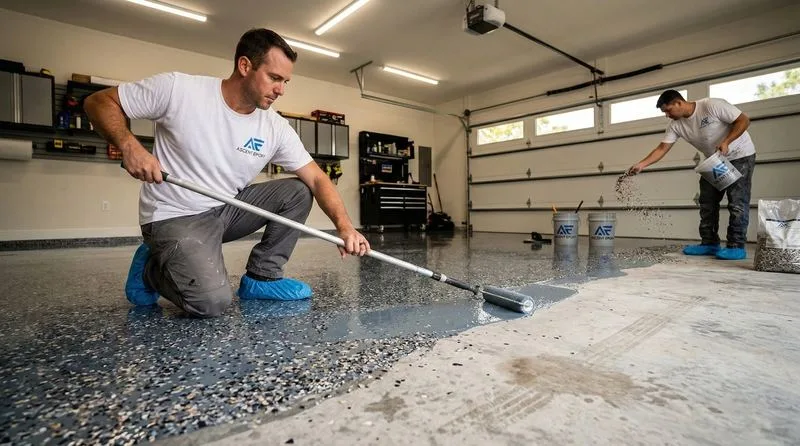
Cure & Enjoy
Per systemWith a polyaspartic topcoat, walk-on is usually within hours and vehicles typically the next day or two; epoxy-only systems need several days, and you get the exact times for your system in writing before we start. We hand you simple care notes and your written 25-year warranty before we pull out of the driveway.
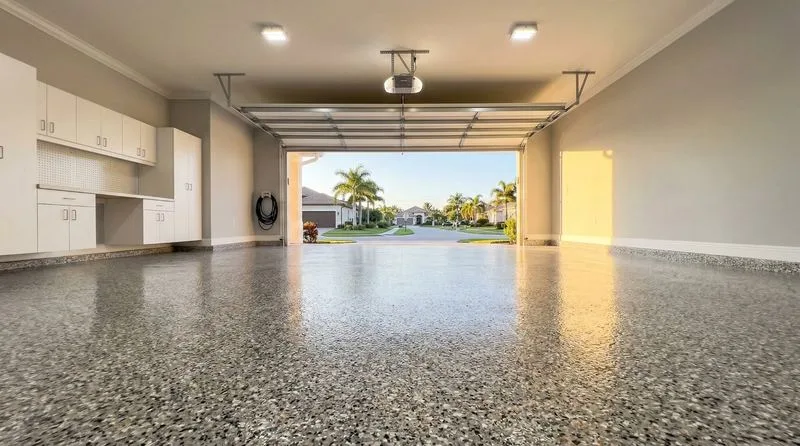
It All Starts With a Free Moisture Read.
Have Blake's crew out to your garage anywhere in the Triad, see flake and metallic samples on your own slab, and get a written number.
Epoxy Garage Floors by Blake's Crew
Real flake and metallic garage floors from the crew's jobs in our other markets — not stock photos. We're newly serving the Triad and will add local floors as we finish them.
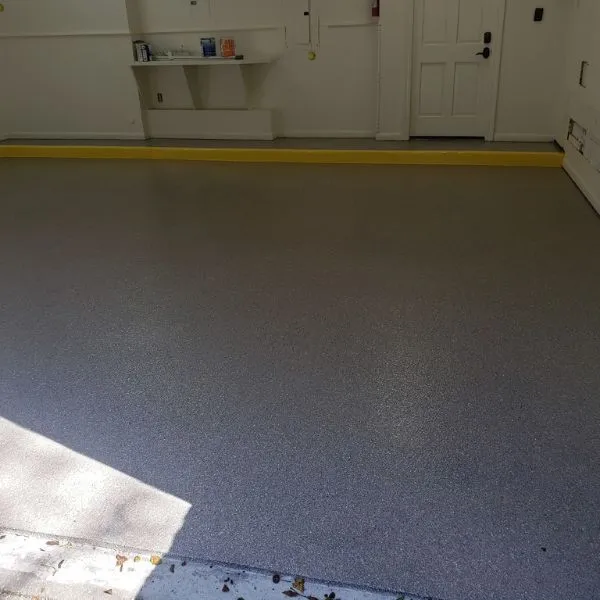
Newly Serving the Triad, With the Process in Writing
Blake's crew leads every job and has done this work in ten other markets before Greensboro.

Meet Blake
Blake leads the crew from the first slab test to the final walkthrough. Most two-car garages are one day on site, and you get the walk-on and drive-on times for your system in writing before we start.
Garage Epoxy FAQs for the Triad
Straight answers to the questions Triad homeowners ask about coating a garage slab.
Most two-car garages in the Triad land between about $2,000 and $4,000 for a standard flake system with a polyaspartic topcoat — typically $4.50 to $8 per square foot depending on slab condition and finish. Solid-color epoxy runs about $4 to $6 per square foot, metallic and quartz systems about $8 to $12 or more, crack and spall repair adds roughly $100 to $500 or more, and a moisture barrier about $1 per square foot. Those are typical ranges, not a quote; the written number comes after we measure the bay and read the slab. Preview a finish and range in the Floor Studio, or read the Greensboro garage cost guide.
Yes. Even when the house is framed over a crawlspace, the garage floor is a concrete slab poured on grade, so it grinds, tests and coats like any other garage slab. That is the whole point for most Triad homeowners: the rest of the house has a wood subfloor, and the garage is the one big piece of concrete you own — usually poured in the 1980s, stained, pitted and sometimes flaking at the door. We diamond-grind it, run the ASTM moisture test, repair the cracks and spalls, and build the coating on sound concrete.
A polyaspartic-topped floor resists it; bare concrete is what suffers. Ahead of winter storms NCDOT and the City of Greensboro pre-treat roads such as Wendover, Battleground and Gate City Boulevard with salt brine and spread rock salt afterward, and your tires carry that slush onto the slab. On uncoated concrete, salt plus freezing and thawing leads to scaling: the surface flakes off in thin layers and leaves pits. A properly bonded coating keeps the brine on top of a sealed surface where it rinses away, so the concrete underneath never sees it. Winters here are mild, but the brine trucks still run most years, and a slab that has already scaled needs repair before it can be coated.
Whenever the slab is warmer than the dew point and the humidity sits inside the product's window, which in a Piedmont July usually means an early-morning start. Greensboro's muggy season runs from late May to late September and July humidity averages around 70 percent, so a garage slab can be cooler than the air and sweat a film of condensation onto its surface; coat over that and the floor never bonds. We read slab temperature and dew point on site before mixing anything, time each coat to the day's readings, and reschedule rather than force a coating onto a sweating slab. Fall through spring offers the widest windows, but summer installs are routine with the right timing.
They are three resin chemistries, and most good garage floors use more than one. Epoxy is the thick, economical body coat that bonds to ground concrete and carries the flake or color; on its own it can amber in sunlight and cures slowly. Polyaspartic is a fast-curing, UV-stable topcoat that resists hot tires, road brine and chemicals and gets you back in the garage sooner. Polyurea is the broader chemical family polyaspartics belong to; some franchises sell it as 20 times stronger than epoxy, a lab figure for one property that says little about how a floor holds up, because prep and moisture testing decide that. Our standard garage system is a base coat with broadcast flake or solid color under a UV-stable polyaspartic topcoat.
With the polyaspartic topcoat we install, walk-on is usually within hours and vehicles typically the next day or two, depending on the system and the weather; epoxy-only systems need several days. You get the exact walk-on and drive-on times for your system in writing before we start. Hot-tire pickup is not a concern on a properly prepped floor with a polyaspartic topcoat, so once the drive-on time has passed you can pull in after a hot run up I-40 without leaving tire marks behind.
Yes, all of it. We diamond-grind and coat the whole slab, including the edges and the floor under the shelving, so cars, shelving, freezers and bikes come out first. Most homeowners need an hour or two the evening before, and if heavy cabinets cannot move, tell us at the estimate visit and we will plan around them.