Industrial Epoxy Flooring in the Triad
Forklift-rated, chemical-resistant floors, installed in phases so production keeps running.
Industrial Floors for the Shops and Warehouses Feeding the Triad's Build-Out
Ascent Epoxy Greensboro installs industrial epoxy, urethane-mortar and ESD floor systems for warehouses, supplier shops and plants across the Piedmont Triad. The Triad's industrial base runs along the two interstates that meet here — the warehouse and distribution suites off I-40 and I-85, the air-cargo and logistics operations around Piedmont Triad International Airport (PTI), and the machine, fabrication and assembly shops that supply the aerospace campuses at the airport and the battery plant at the Liberty megasite. Add the food and beverage plants, breweries, cold storage and fleet yards that keep a region of 1.7 million people running, and you have a lot of concrete taking a beating from forklifts, pallet jacks, washdowns and process chemicals.
Every one of these buildings shares the same weak point underfoot: a concrete slab that is often decades old, dusting and pitted, and — for four humid months a year — sitting under warm, damp air that condenses on a cooler floor. Moisture trapped under a coating is the single biggest reason industrial floors blister and peel, and on a large slab one bad zone is an expensive one. We engineer around it: an ASTM moisture survey across the whole floor, moisture-mitigation primers where the readings call for them, and chemistry that bonds to a properly ground substrate instead of fighting it. In winter, the brine and rock salt that fleet trucks and forklifts carry in from treated roads add scaling to the list — a coated slab shrugs it off; a bare one flakes.
For the Triad's real industrial mix — warehousing and 3PL logistics, supplier-tier machine and fabrication shops, food and beverage and brewing, auto and fleet maintenance, and the light manufacturing that supports all of it — we match the system to the job: chemical-resistant coatings for wash and process areas, urethane mortar for thermal-shock and food zones, impact-rated build for forklift aisles, and ESD systems for electronics and battery-related work. This is heavier-duty work than our commercial epoxy flooring, which is built for retail, showroom and office traffic rather than round-the-clock industrial loads.
Running a showroom, office, or hospitality space instead of a plant? Our commercial epoxy flooring service is the right fit.
What a Triad Industrial Floor Has to Beat
Humid summers, brine tracked in after every ice storm, washdown chemicals and round-the-clock forklift loads — here is how the right system handles each.
Novolac option
Chemical & Washdown Resistant
Stands up to the cleaners, sanitizers, oils, coolants and process chemicals a shop or plant deals with daily — from caustic sanitation in a brewery or food plant to cutting fluid in a machine shop and battery acid in a fleet bay. We spec standard or novolac systems to your actual chemical list.
Forklift duty
Built for Forklifts & Heavy Machinery
Takes the constant turning, point loads and abrasion of forklifts, pallet jacks and loaded racking without cracking or delaminating — the kind of duty the 3PL and distribution suites along I-40 and I-85 run every shift, around the clock.
Anti-skid
Slip-Safe in Wet Conditions
Anti-skid aggregate and high-traction topcoats keep footing safe where floors stay wet — washdown bays, food-prep zones, and dock doors that track in summer rain and winter slush, so a damp floor keeps its grip.
Custom
Safety Line Marking
Forklift aisles, pedestrian walkways, hazard zones, dock-edge warnings and equipment footprints laid out and color-coded into the floor itself — applied in durable epoxy that won't lift under the wheel traffic and washdowns of a busy Triad warehouse.
ESD
Anti-Static (ESD) Options
Conductive and dissipative ESD systems for electronics assembly and the battery- and aerospace-supplier work growing around the Liberty megasite and PTI — where static is a real hazard. ESD systems are specified to the rating your process requires.
Tested prep
Built to Last Through Humid Summers and Brine Winters
The reason industrial floors fail early isn't the traffic — it's moisture under the bond and shortcuts in the prep. Get the moisture survey, the grind and the chemistry right for a humid Piedmont slab, and an industrial system runs for many years of hard service instead of peeling in a few. That is the entire difference between a one-time install and a recurring resurfacing bill.
How humidity affects durability →From Bare Slab to Production Floor in Five Steps
Every step is built around the moisture testing that makes or breaks a coating through a humid Triad summer, and phased so a working facility keeps running.
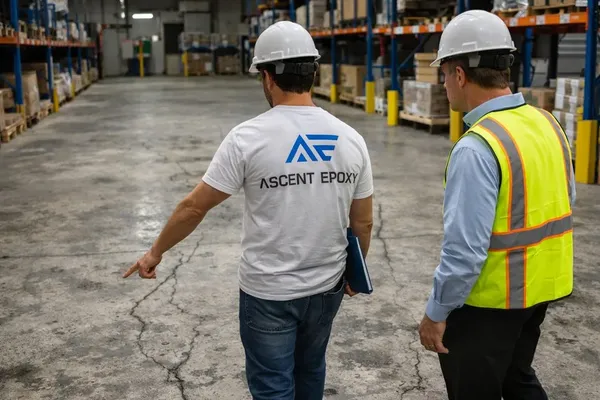
Facility Assessment
~Half dayWe walk the whole facility, map forklift lanes and wet zones, log every chemical it handles, and check the age and exposure of the slab — older Piedmont slabs and later additions often read very differently. The moisture readings tell us how aggressive the mitigation plan needs to be. Schedule yours free.
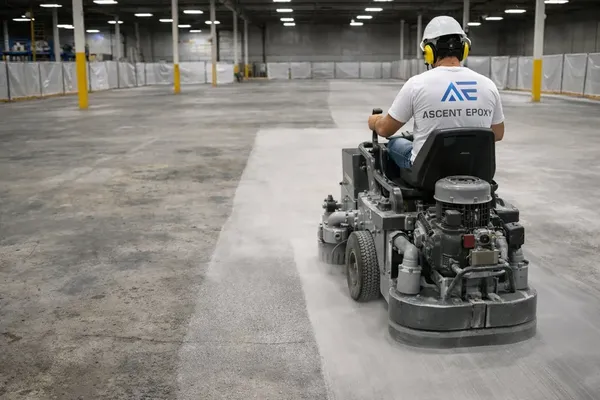
Industrial Slab Preparation
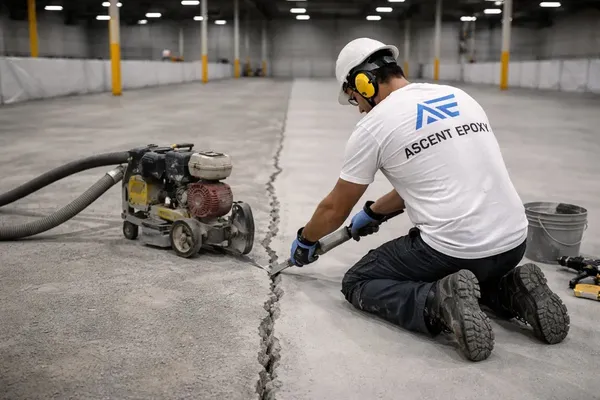
4–8 hrsDiamond grinding and shot blasting open up the slab to a real bonding profile — not a wipe-and-roll. We chase out the scaling that road brine and rock salt leave near dock doors and fleet entries, then rout and fill every crack and control joint so nothing telegraphs through the finished floor.
Primer & Moisture Mitigation
2–4 hrsThis is the step that decides whether a floor lasts. We test slab moisture with calcium-chloride and in-slab relative-humidity probes, and where an older slab reads high we lay down a moisture-mitigation primer before the industrial primer. Skip it and the floor blisters within a season; do it right and the bond holds for years.
Epoxy System Application
1–3 daysThe build coats go down to the spec the assessment called for — urethane cement in food and washdown zones, chemical-resistant or novolac in process areas, high-build impact-rated in forklift aisles, or ESD where static matters. Forklift lanes, walkways, dock warnings, and anti-skid aggregate for wet footing are integrated as we go, not bolted on after.
Curing & Handoff
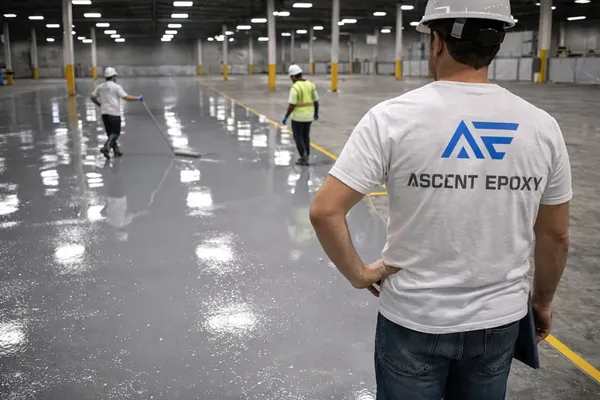
Per systemWe control the cure — watching slab temperature and the humidity a Piedmont summer pushes into a building — then check hardness and adhesion before we hand it back. Your team gets maintenance guidelines written for this coating and this facility, including how to clean off winter brine and process chemicals without breaking down the finish.
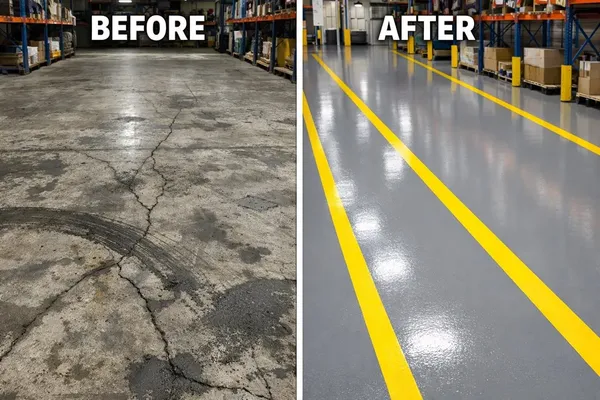
Step 1 Is a Free Facility Walk-Through.
Book yours and get a phased plan and a written price for your floor before you commit.
Industrial Floors by Blake's Crew
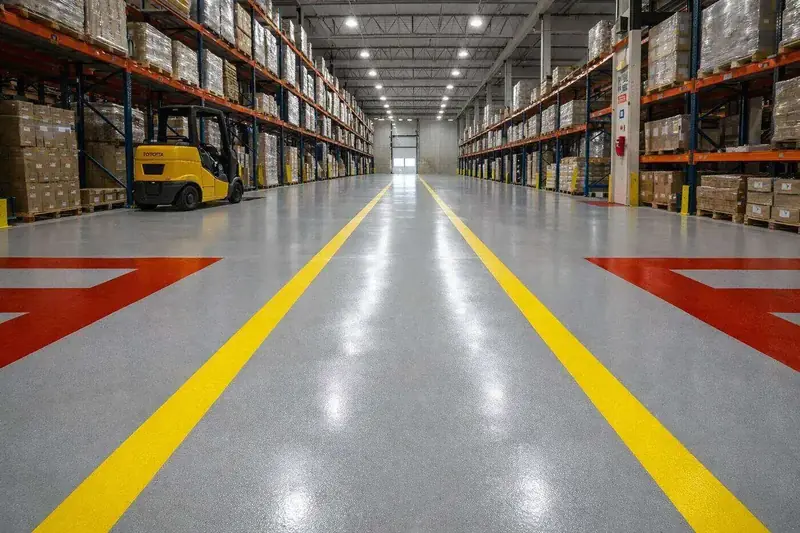
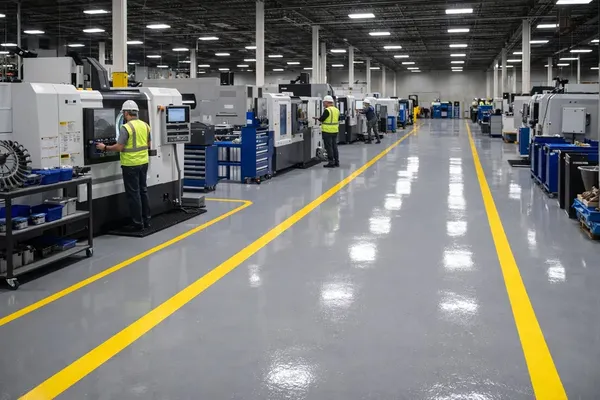
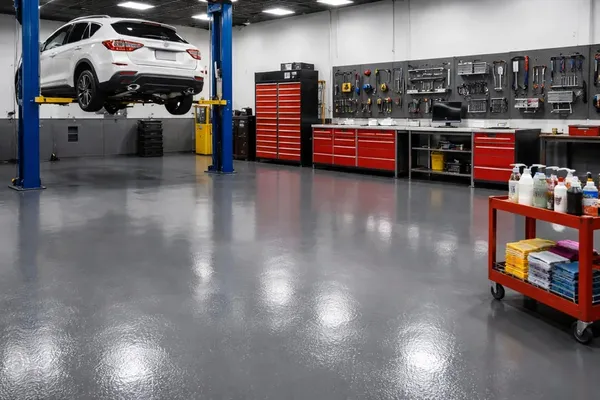
Warehouse, safety-marked and service-bay floors from the crew's jobs in our other markets; Triad facilities will be added as they are finished.
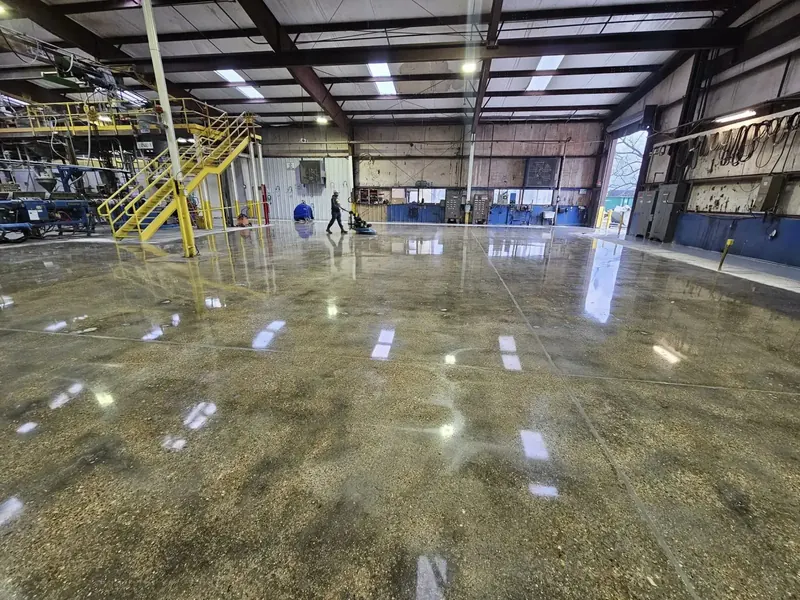
Systems We Install for Triad Facilities
Warehousing, food and beverage, supplier-tier shops, fleet yards — each one needs a different floor, and we match the system to the work, the chemicals and the slab underneath it.
Urethane Cement Flooring
Urethane cement — often called urethane mortar — is the toughest floor we install, built for the rooms where standard epoxy simply gives up. It bonds tight to concrete and shrugs off thermal shock: hot-water sanitation and steam cleaning, chemical washdowns, the swing from a chilled cooler to a hot kitchen line or a brew kettle. Just as important on an older slab, it tolerates moisture in the concrete better than most systems.
That makes it the natural pick for the Triad's food and beverage processors, breweries and taprooms, commercial kitchens, and cold-storage and meat rooms — anywhere the floor is washed down daily and never really dries out. It cures fast and returns to service quickly, so a working line is back up without a long shutdown. As a national benchmark, urethane mortar runs about $8–$15 per square foot installed; a free walk-through gets you a written number for your floor.
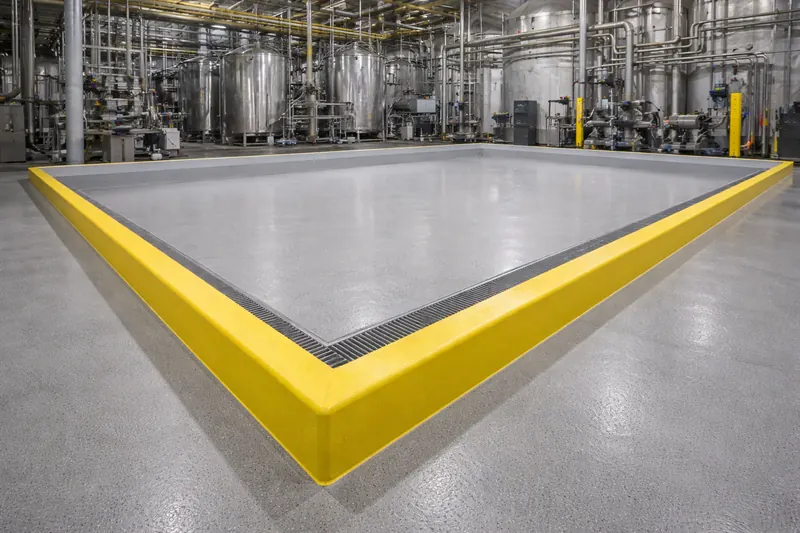
Warehouse Floor Coatings
The Triad's distribution and 3PL warehouses — the suites along I-40 and I-85, the logistics parks around PTI, and the fulfillment and sort operations out toward Kernersville and McLeansville — put more daily load on a floor than almost anything else. Forklifts pivot on the same spots, pallet jacks drag across the surface, and racking concentrates tons onto tiny footplates. Add humid summers and a bare slab dusts, cracks and fails faster than most warehouse managers plan for.
We build these floors in high-build epoxy with abrasion-resistant topcoats rated for that traffic, and we lay the aisle striping, pedestrian zones and dock-edge color coding into the system rather than painting it on later. Because most of these buildings can't shut down, we phase the work zone by zone so racking stays loaded and trucks keep moving while we coat the rest. As a national benchmark, a standard two-coat epoxy runs about $3–$5 per square foot, a high-build 100%-solids system about $5–$8, and polyaspartic systems $5–$12; your written quote comes after a free walk-through.
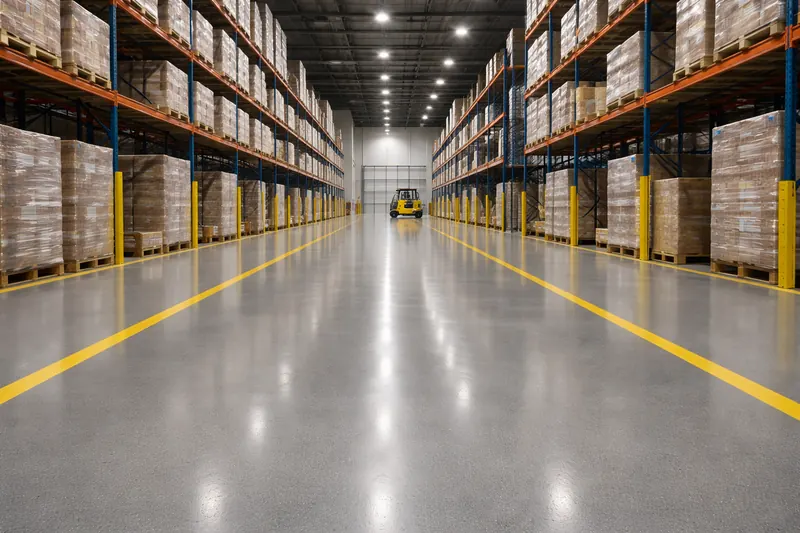
Secondary Containment Areas
Plenty of Triad facilities store or handle materials that legally can't be allowed to reach the ground — diesel for standby generators and fleet fueling, oils and coolants in machine shops, and the chemical and solvent stores behind manufacturing and service shops. The stakes are environmental as much as regulatory: a spill that escapes containment runs to the storm drains and creeks that feed the region's water-supply lakes.
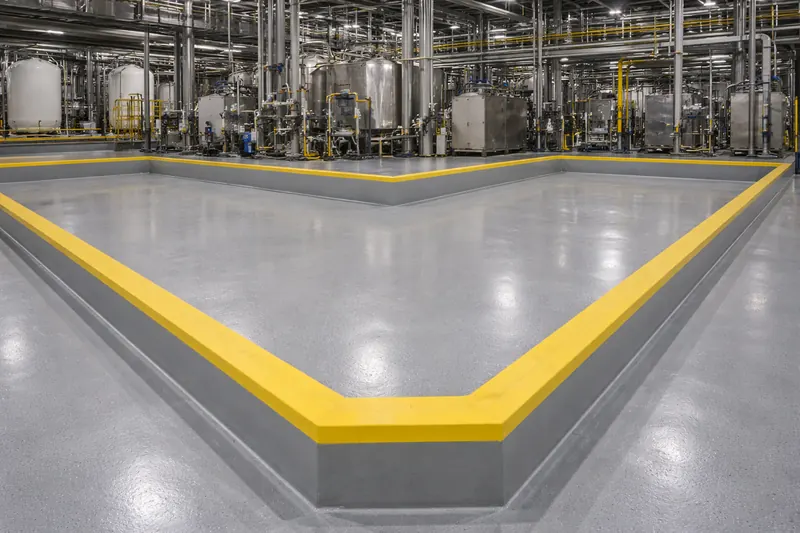
We install chemical-resistant containment coatings with integrated curbing and berms that keep a leak inside the room and out of the storm drains. Curb height and coating are specified in writing from the containment volume your facility needs, and the coatings stand up to acids, bases, fuels and solvents — sealed tight to a slab that has been ground, repaired and moisture-tested first.
Newly Serving the Triad, With the Process in Writing
Blake's crew leads every job and has done this work in ten other markets before Greensboro.

Meet Blake
Blake leads the crew from the first slab test to the final walkthrough. Industrial floors typically run three to seven days on site, phased so racking stays loaded and shipping keeps moving, with a written timeline for each zone.
Industrial Epoxy Flooring FAQs for the Triad
Common questions about industrial epoxy flooring for Triad facilities.
Warehouses and distribution suites along I-40 and I-85, supplier-tier machine, fabrication and assembly shops around Piedmont Triad International Airport (PTI) and the Greensboro-Randolph Megasite in Liberty, food and beverage plants and breweries, fleet and maintenance bays, and control rooms and clean environments. Each gets a system matched to its loads and chemicals — from chemical resistance in process areas to impact resistance in forklift aisles.
Humidity sets the schedule on a large slab. The Triad's muggy season runs from late May into late September, and warm, damp air over a cooler concrete floor can condense on the surface and trap moisture under a coating — the classic cause of delamination on big warehouse floors, where one bad zone can affect thousands of square feet. We test moisture across the whole slab with ASTM calcium-chloride and in-slab relative-humidity probes, apply a moisture-mitigation primer where readings are elevated, and time each pour by slab temperature and dew point rather than by the calendar.
Yes. Industrial epoxy systems use chemical-resistant resins that stand up to acids, alkalis, solvents, cutting fluids, oils and fuels. We match the resistance rating to the chemical list from your facility walk-through: standard epoxy for oil, grease and mild cleaners; novolac epoxy for machine shops, plating and process areas that handle concentrated acids and harsh solvents; and urethane mortar where hot water and caustic sanitizers are the daily load.
Yes. Safety line marking goes into the floor system itself — pedestrian walkways, forklift lanes, hazard zones, equipment footprints, dock-edge warnings, emergency exit paths and color-coded areas. The lines are applied in durable epoxy that bonds to the coating and holds up under wheel traffic and washdowns without fading or peeling.
Most industrial floors take three to seven days on site, depending on square footage, slab condition and the system. Larger facilities are phased so racking stays loaded and shipping keeps moving while we coat the rest of the building, and you get a written project timeline — including return-to-service times for each zone — during the estimate.