Epoxy Floor Repair in the Triad
Peeling, pitted or scaling floors: we find why it failed, fix it and resurface.
Why Triad Garage Floors Fail Sooner Than They Should
Ascent Epoxy Greensboro repairs and resurfaces scaled, pitted and peeling garage and shop floors across the Piedmont Triad. Start with the bare slab, because most Triad garage floors have never been coated at all. NCDOT and the City of Greensboro pre-treat the main roads with salt brine before an ice storm and spread rock salt after it, your tires carry that slush into the garage, and through a winter of roughly 68 freezing nights the salt-soaked surface freezes and thaws until it lets go. That is scaling — thin flakes lifting off the surface, pits opening up near the door, aggregate showing through — and on a slab poured in the 1980s it has often been building for decades. Winters here are mild, but they are not salt-free.
Coated floors fail for different reasons. The most common is moisture: an older slab that was never tested pushes vapor up under the coating until bubbles, hollow spots and lifting edges appear, usually within the first year. Close behind are the hardware-store kits — thin coatings rolled over an acid etch instead of a ground surface, which peel under hot tires and stain the first time oil hits them. Then there are the installs forced onto a slab that was sweating in July, when Greensboro's humidity averages around 70 percent and a cool slab condenses water out of the air; a coating applied over that film never bonds the way it should. Add hot-tire pickup and topcoats that have gone chalky in the sun, and you have most of the reasons a garage floor fails early.
Most failed floors have one thing in common — nobody looked at the slab before coating it. Re-coating on top of that just resets the clock until it fails again. We don't do that. We find out why the floor let go in the first place — scaling from brine, trapped slab moisture, oil or salt contamination in the surface, thin or skipped prep, or an incompatible product — and we solve that before a drop of new coating goes down. The result holds up to a Piedmont year, not just to a photo on day one.
Read our guide to epoxy vs polyaspartic vs polyurea, and why the topcoat matters for brine →
Garage Floor Resurfacing and Epoxy Repair, Done Right
No painting over the problem. We test the slab, name the real cause, and rebuild the floor to live with tracked-in road brine, humid summers and the hot tires of a Triad August.
Find it first
Pinpoint the Real Cause
Scaling at the garage door and bubbles in the middle of the bay are different problems. We diagnose which one you have — road-salt scaling, slab moisture, oil or salt contamination, or thin prep — before we touch a coating.
Why summer humidity matters at install →Moisture first
Mitigation for Damp Slabs
Older slabs, below-grade basement floors, and slabs poured without a vapor retarder often read high for vapor. For those, we install a moisture-mitigation primer system so the next coating bonds and stays put instead of lifting again.
Down to bare
Full Strip & Resurface
When a coating is too far gone — delaminated, a failed hardware-store kit, or layered over scaled concrete that was never prepped — we diamond-grind it back to sound concrete, rebuild the surface, and install a system with a polyaspartic topcoat that shrugs off brine and hot tires.
Targeted
Spot Repairs & Re-Topcoat
Plenty of Triad floors don't need a teardown — just a hot-tire mark fixed, a chipped garage edge filled, or a UV-dulled topcoat refreshed. We handle the localized work and re-topcoat for a fraction of a full replacement.
Stay ahead
Simple Maintenance
Winter brine and summer grit work on a floor all year. A simple routine — rinse the slush off in January, sweep out red clay tracked in from job sites and ball fields, check the wear lanes each spring, and re-topcoat before the wear layer is gone — catches small problems before they turn into a strip-and-redo.
Honest call
Repair Before Replace
Restoring a sound slab almost always beats tearing it out and pouring again. If a spot repair or re-topcoat will get you years more, that's what we'll tell you — and only recommend a full rebuild when the slab genuinely needs one.
See our Greensboro pricing guide →Our Triad Repair Process
Five steps that deal with why the floor failed — not just how it looks — so the fix survives the next brine season and the next muggy July.
Free Assessment
~45 minWe come to your home or shop anywhere in the Triad, walk the floor with you, and document exactly how it's failing — scaling and pits at the door, lifting edges, hollow spots, hot-tire marks. No cost, no obligation. Schedule yours free.
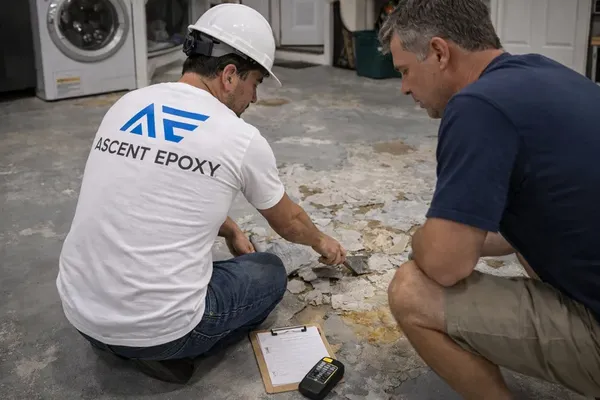
Diagnosis & Testing
1–2 hrsWe run moisture and adhesion testing on the slab — critical on a 35-year-old garage floor, a basement slab, or any floor that has already lost one coating — plus a look at the existing material, so we know whether it's vapor pressure, salt scaling, contamination, weak prep, or a mix.
Surface Preparation
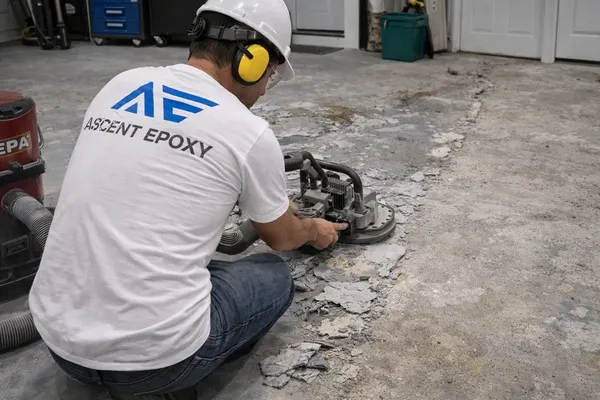
2–4 hrsBased on what we found, we either scarify the existing surface or diamond-grind the old coating back to bare concrete, grinding out any scaled or loose material along the way. On slabs that read high for moisture, the moisture-mitigation primer system goes down at this stage so vapor can't lift the next coat.
Repair & Re-Coat
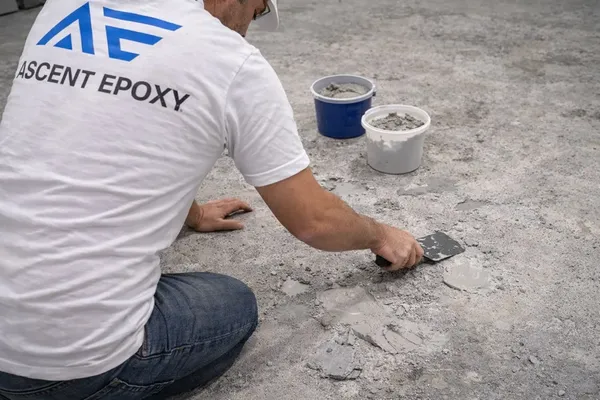
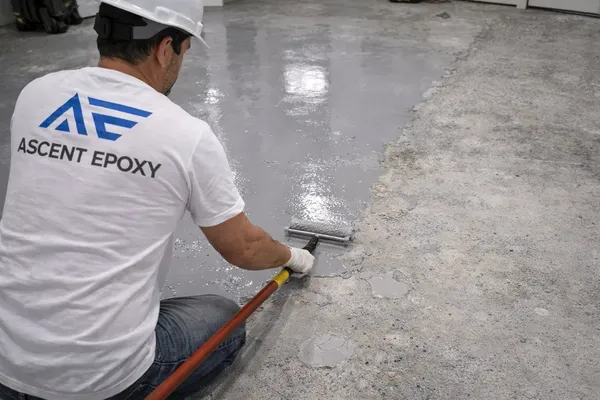
3–5 hrsWe fill cracks, rebuild chipped edges, patch the worn spots, and lay down the coating system matched to your slab — chosen to stand up to tracked-in road brine, hot tires and summer humidity rather than a generic off-the-shelf kit.
Cure & Warranty
Per systemWe schedule the work and time the cure around slab temperature and the day's humidity — a coating forced onto a sweating slab in July is one of the most common reasons floors fail here. You read the warranty terms for your repair in writing before we start, and your copy comes with the finished floor, spelling out what a spot repair, a re-topcoat or a full strip-and-resurface covers.
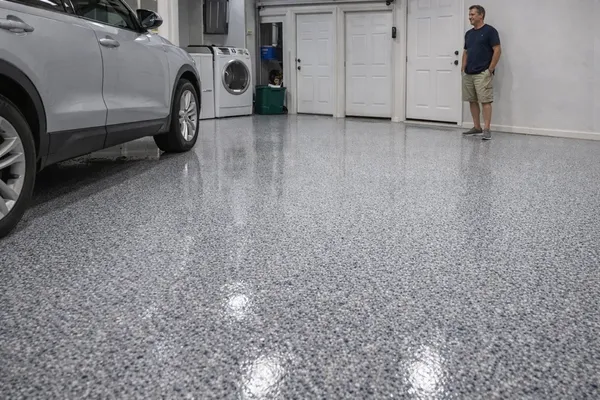
Step 1 Is a Free Look at Why Your Floor Failed.
Book a no-obligation assessment anywhere in the Triad — we'll read your slab and show you finish samples right where the floor lives.
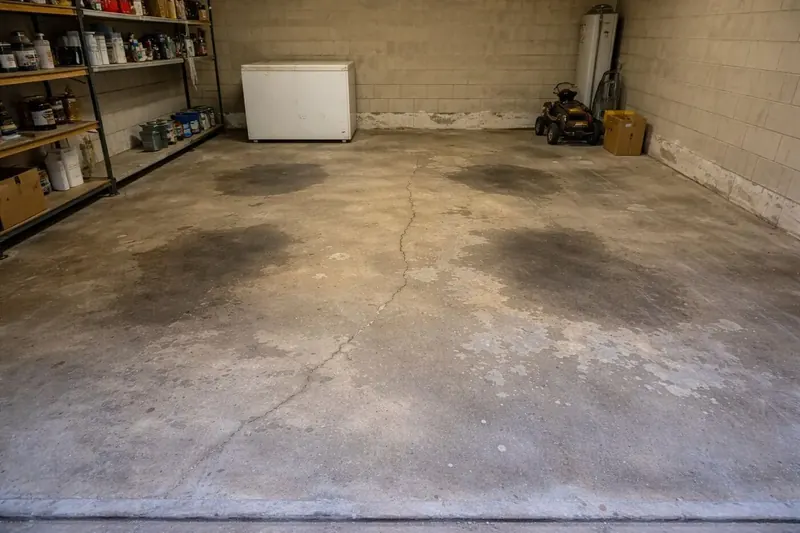
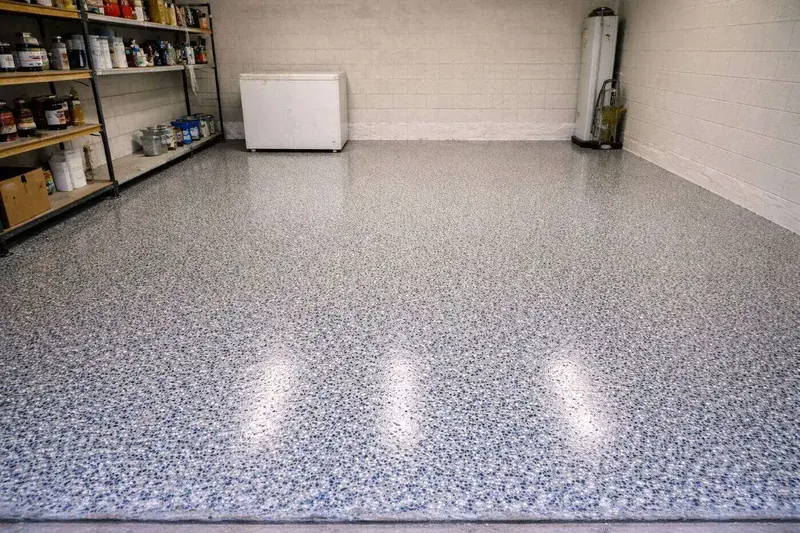
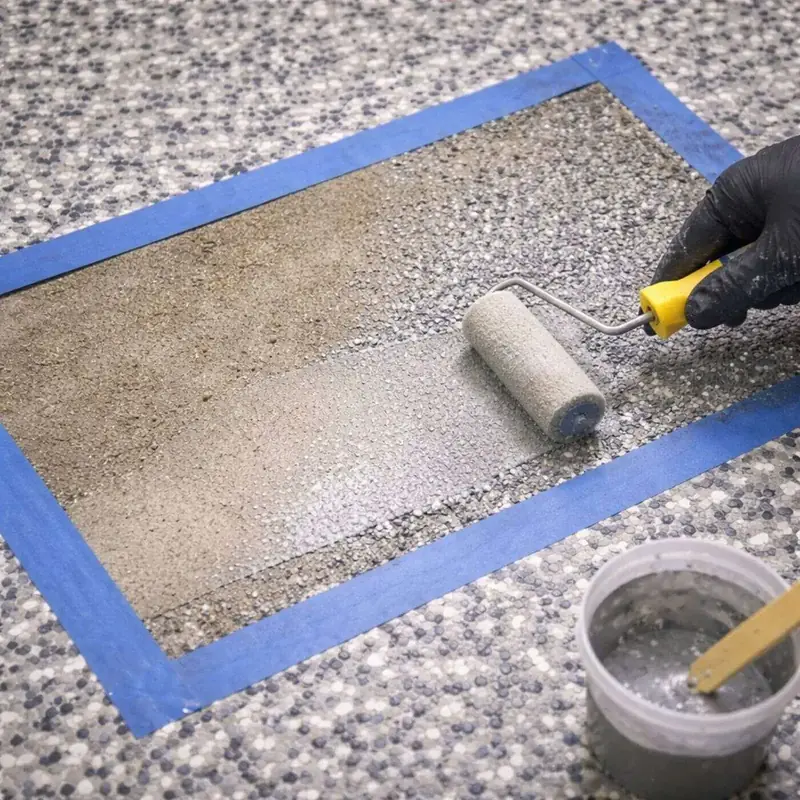
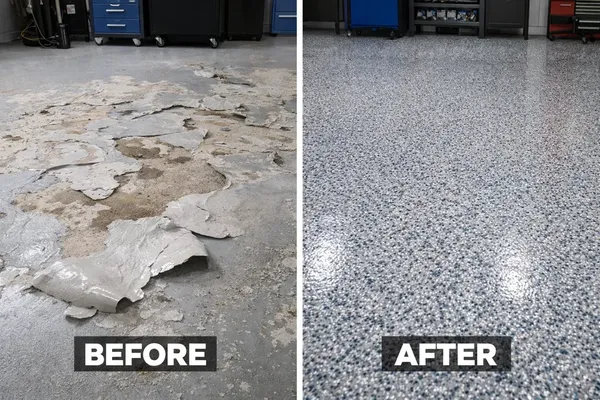
Floors Blake's Crew Brought Back
Before-and-after results from real repair and resurfacing jobs in the crew's other markets — not stock photos. Triad projects will be added as we finish them.
Newly Serving the Triad, With the Process in Writing
Blake's crew leads every job and has done this work in ten other markets before Greensboro.
Meet Blake
Blake leads the crew from the first slab test to the final walkthrough, and you get a written, line-item price and the walk-on and drive-on times for your repair before any work starts.
Epoxy Repair FAQs for the Triad
Common questions about scaling, peeling coatings and garage floor resurfacing in the Triad.
That is scaling, and in the Triad it usually starts with road salt. Winter brine and rock salt come in on your tires, the slab freezes and thaws through the cold months — Greensboro averages about 68 nights a year at or below freezing — and the salt-soaked surface layer breaks loose in thin flakes, leaving pits and exposed aggregate. Weaker concrete goes first.
A scaled slab can absolutely be resurfaced, but the loose material has to be ground out and the surface rebuilt before any coating goes on; a coating rolled straight over it will fail.
Almost always because of what was under it, not the epoxy itself. The usual causes are moisture pushing up through a slab that was never tested, a surface that was acid-etched or just cleaned instead of ground, oil or old sealer left in the pores, or a thin one-part coating that was never going to hold up to tires. Trapped moisture is the most common: vapor collects under the coating and lifts it in bubbles and hollow spots, then the edges let go, and it gets worse after a wet winter or a muggy summer.
We test the slab and check the bond before we recommend a fix, so the repair addresses the cause instead of resetting the clock.
Yes. It is one of the most common floor repairs there is. Hardware-store kits are thin coatings applied over an acid etch instead of a ground surface, so they lift under hot tires, stain, and peel wherever the slab was damp or dusty. The fix is not another coat on top: we grind the old kit off down to sound concrete, repair the pits and cracks it was hiding, run the moisture test the kit skipped, and install a full-thickness system with a polyaspartic topcoat.
Expect the job to land in the same typical $2,000 to $4,000 range as a new two-car garage floor, plus the removal work.
Sometimes. If the existing coating is well bonded, clean and compatible, we can scarify or sand it to a dull profile and apply a new topcoat or a full system over it. If it is delaminating, contaminated with oil or salt, thin, or sitting on a slab that was never tested for moisture, a full strip back to bare concrete is the only repair that lasts.
We check adhesion and moisture on site before recommending either route — no guesswork.
It depends on what failed. As typical ranges, not quotes: crack and spall repair adds about $100 to $500 or more to a job, a moisture barrier runs about $1 per square foot, a fresh topcoat over a sound floor costs well under a new system, and a full strip and resurface of a two-car garage lands close to a new install, typically about $2,000 to $4,000 plus removal.
We give you a free on-site assessment and a written, line-item price before any work starts. See our Greensboro cost guide for the ranges behind those numbers.
Yes. A coated floor needs very little, but a simple routine keeps it out of the repair column: rinse road brine off in winter rather than letting it sit, sweep out red clay tracked in from job sites and ball fields and the grit that grinds at the finish, watch the wear lanes where tires park, and re-topcoat before the wear layer is gone.
We check the floor on request, answer care questions, and schedule a re-topcoat when it is due, for your home or your shop.